
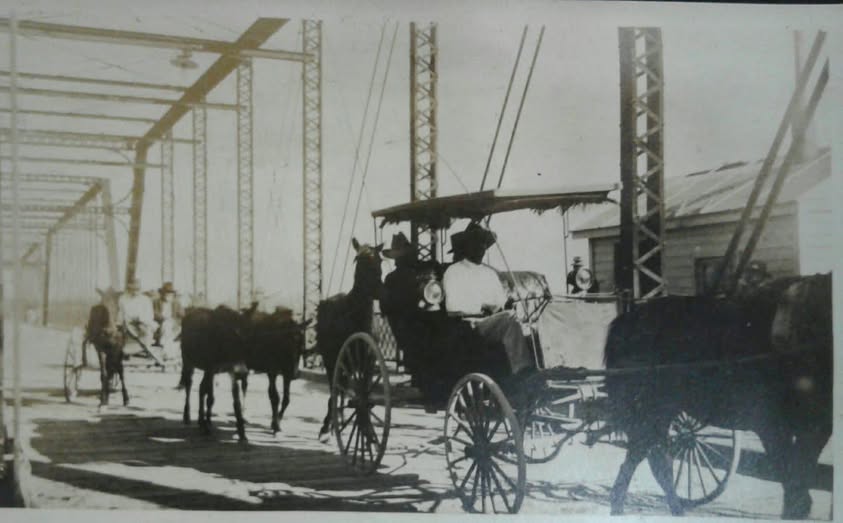
La imagen que acompaña este recuerdo es un verdadero viaje al pasado. En ella se aprecia cómo era el cruce fronterizo entre Eagle Pass y Piedras Negras en una época en la que la vida transcurría a otro ritmo.
La fotografía muestra carruajes tirados por caballos avanzando sobre la estructura metálica del puente, reflejando una etapa en la que los automóviles aún no dominaban las calles. Las personas vestían de manera formal, y el transporte era más pausado, casi solemne. Cruzar la frontera no era solo un trámite, sino toda una experiencia cotidiana marcada por la paciencia y la cercanía entre las comunidades de ambos lados.
Un puente que unía más que dos países
Mucho antes del tráfico vehicular moderno, este cruce era testigo de intercambios comerciales, visitas familiares y la vida diaria de una región profundamente conectada. El paso constante de carretas, comerciantes y viajeros daba forma a una dinámica fronteriza donde el tiempo parecía transcurrir más lento, pero con un fuerte sentido de comunidad.
La estructura del puente, visible en la imagen, deja ver la ingeniería de la época: sólida, funcional y pensada para soportar el tránsito de carruajes y peatones. A su alrededor, se percibe un entorno sencillo, sin la infraestructura compleja que hoy caracteriza a los cruces internacionales.
Del pasado al presente: una frontera en evolución
Comparar esta escena con la actualidad deja ver un cambio radical. Hoy, el cruce entre México y Estados Unidos es mucho más ágil en infraestructura, pero también más demandante por el volumen de tráfico.
Esta fotografía, compartida por Jeff Taylor Sr., es más que un recuerdo: es un testimonio del crecimiento de la frontera y del vínculo histórico que une a ambas ciudades.
Crossing Back in the Day: A Glimpse into the History of Bridge 1
The image accompanying this story offers a fascinating look into the past. It captures what crossing the border between Eagle Pass and Piedras Negras was like in a time when life moved at a much slower pace.
The photograph shows horse-drawn carriages traveling across the metal bridge structure, reflecting an era before automobiles dominated daily life. People were dressed formally, and transportation was steady and unhurried. Crossing the border wasn’t just a process—it was part of everyday life, filled with patience and a strong sense of community.
A bridge that connected more than two countries
Long before modern traffic, this crossing witnessed trade, family visits, and the daily interactions of a closely connected border region. The steady movement of wagons, merchants, and travelers created a unique rhythm where time seemed slower, yet more personal.
The bridge structure itself highlights the engineering of the time—simple, sturdy, and built to support carriages and pedestrians. The surrounding environment appears minimal compared to today’s complex border infrastructure.
From past to present: an evolving border
Comparing this historic scene to today reveals a dramatic transformation. Modern crossings between Mexico and United States now handle heavy vehicle traffic with advanced systems and stricter procedures.
This photo, shared by Jeff Taylor Sr., serves as a powerful reminder of how much has changed—while the connection between these two border communities remains as strong as ever.