
The Significance of January 8th: Three Important Events in Kickapoo History
January 8th holds significant importance to the Kickapoo Traditional Tribe of Texas as it
marks three historical events: the Battle of Dove Creek, the Kickapoo Act of 1983, and the
acquisition of land that became the permanent homeland for the Kickapoo Tribe.
While many accounts of the Battle of Dove Creek exist, they all reach the same
conclusion. On January 8th, 1865, a group of 500 migrating Kickapoo members were ambushed
in a surprise attack by Confederate soldiers and Texas militia in present-day San Angelo, Texas.

By sunrise, 170 Confederate soldiers and 220 members of the Texas
Militia had arrived to lie in wait. By 9:00 a.m., Frontier Ranger
Captain N.M. Gillentine and Confederate Captains S.S. Totten and
Henry Fossett coordinated an attack plan. The Militia launched a
frontal assault at 9:30 a.m. while Confederate forces moved
southwest to capture the horse herd and strike from the flank. Despite
being unprepared for the initial violence, the Kickapoo camp used
their terrain to their advantage, defending from a timber-covered
bank. This natural defense lead to the Texas Militia to suffer from
natural hazards while under attack from the Kickapoo tribe. By 10:00
a.m., the Texas Militia had retreated. Although Confederate soldiers
captured the horse herd at 10:15 a.m., their strategy collapsed under
the pressure of the Kickapoo tribe’s counter-attack. After hours of
heavy fighting, the Confederate soldiers retreated at 5:00 p.m. Despite
the loss of their horses, the Kickapoo Tribe successfully won the Battle of Dove Creek.
More than a century later, the Kickapoo Tribe lived under International Bridge One in
Eagle Pass, Texas. Living conditions were dire, as they faced illness, unsanitary facilities, a lack
of electricity, unclean water, and social ridicule. Beyond these
hardships, the Tribe lacked permanent land for settlement and
traveled frequently between Eagle Pass and El Nacimiento,
Coahuila, Mexico. At the time, the citizenship status of many
Tribal members was unclear. The United States and Mexico
did not recognize them as legal citizens and many were issued
identification cards stating “pending clarification status by
Congress”. However, several advocates emerged to champion
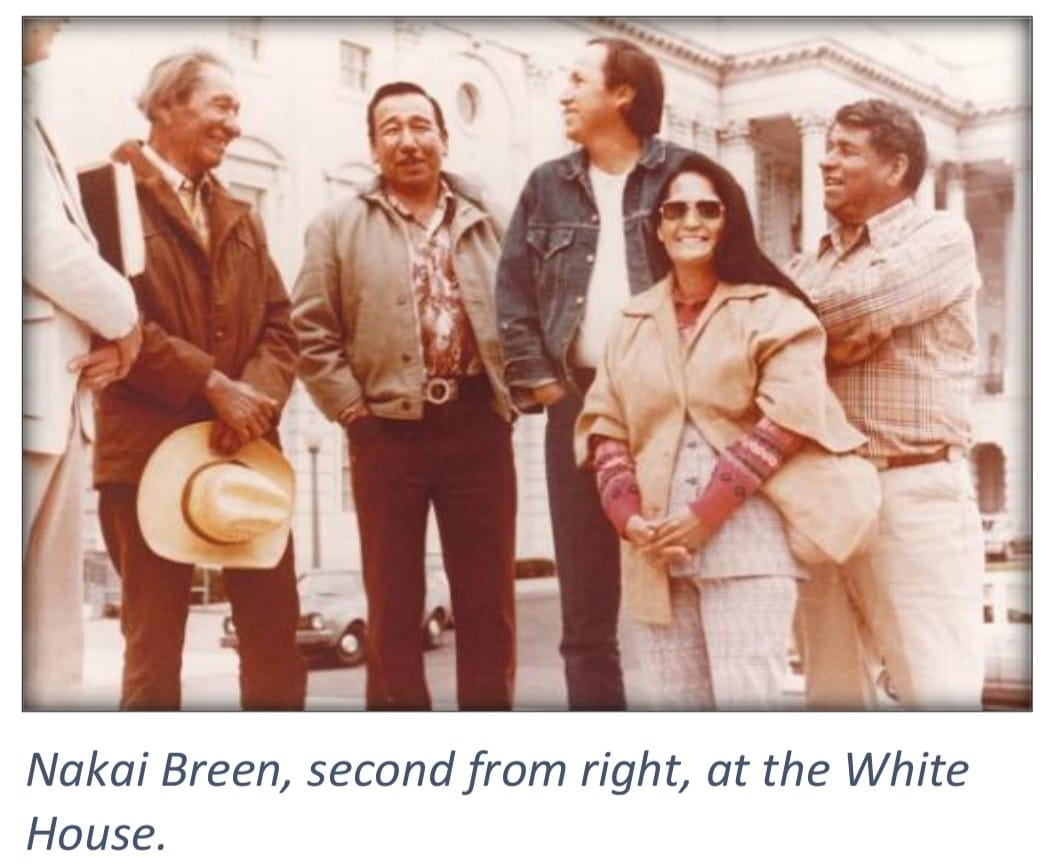
the Tribe’s cause. Nakai Breen became a powerful voice for
the Kickapoo Tribe, fighting for running water and public
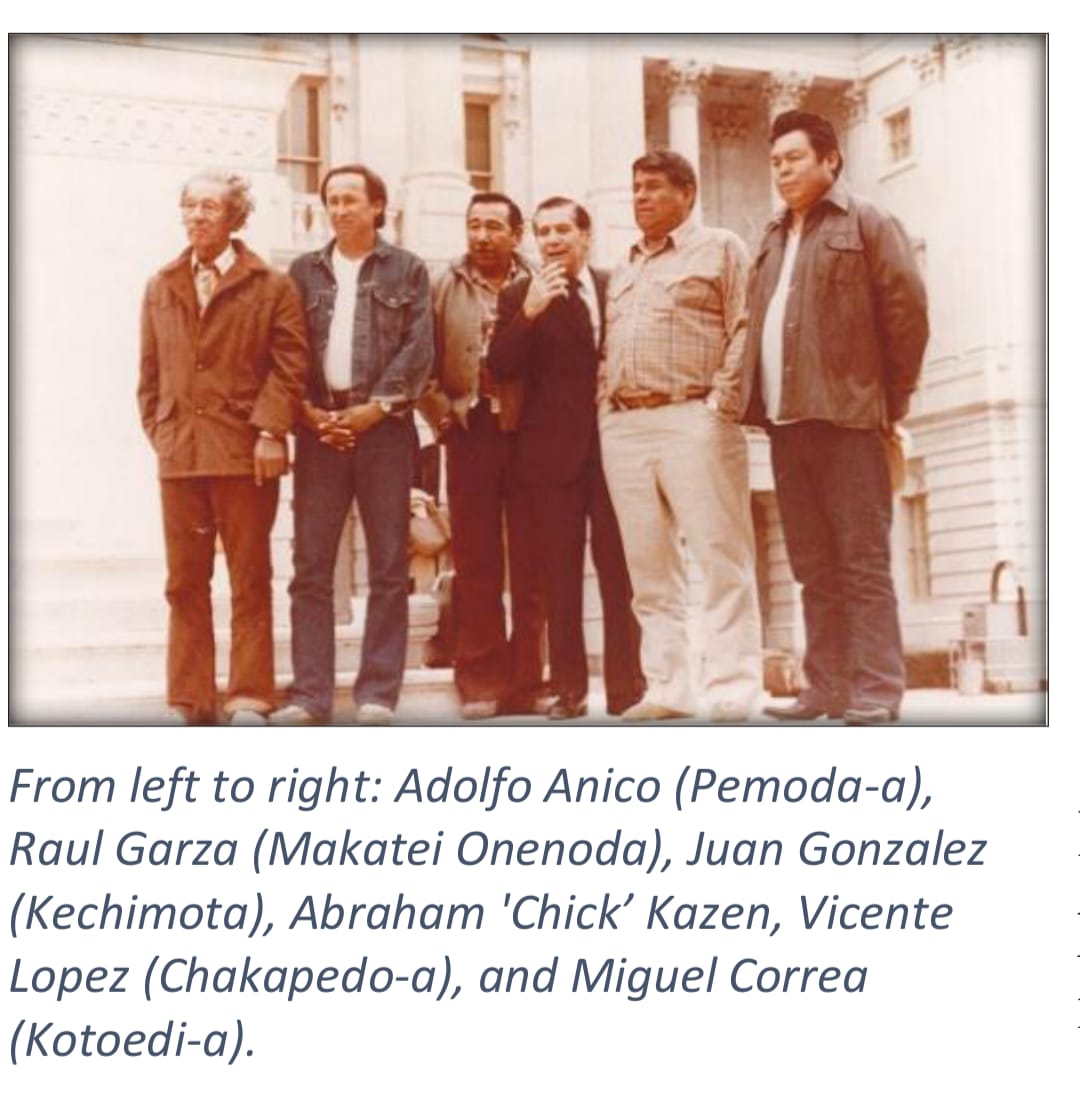
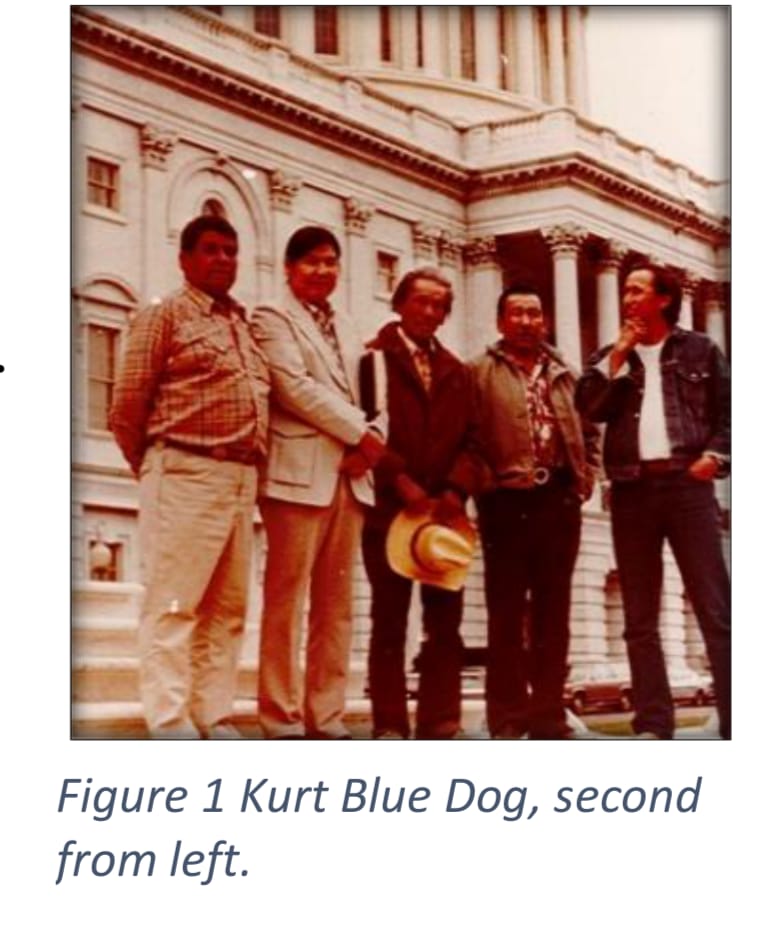
restrooms. Along with Breen, U.S. Congressman Abraham
‘Chick’ Kazen and Native American attorney and advocate Kurt Blue Dog worked tirelessly to
support the Tribe. Their combined efforts led the push for the official federal recognition of the
Kickapoo Tribe.
On January 8th, 1983, through the efforts of Breen,
Chick Kazen, Blue Dog, and members of the Kickapoo
Tribe, the Kickapoo Act of 1983 was signed by President
Ronald Reagan. This Act officially granted federal
recognition to the Kickapoo Tribe. As a result, the Tribe
became eligible for federal social services, including housing
and healthcare. Furthermore, the Act clarified citizenship
status, allowing members to move freely between Mexico
and the United States. It also enabled the Tribe to establish a
land base in Maverick County, providing them with a
permanent home. The Kickapoo Act of 1983 served as a
major turning point, ending years of worry and uncertainty
about the Tribe’s future.
On January 8th, 1985, through fundraising and donations, the final
payment for the 125-acre land tract was made. This established a permanent
home base, allowing the Tribe to escape their poor living conditions at the time.
The Kickapoo Act of 1983 made it possible for the Tribe to have a permanent
home base, providing a stable life for members while allowing them to
maintain their traditional ties to El Nacimiento, Coahuila, Mexico.
January 8th serves as a profound symbol of resilience and perseverance
for the Kickapoo Traditional Tribe of Texas, weaving together a history of
survival, legal triumph, and homecoming. From victory at the Battle at Dove
Creek in 1865 to the legislative milestone of the Kickapoo Act of 1983, the Tribe has always
fought for the protection of their people and their cultural identity against all odds. The purchase
of the 125-acre homeland in 1985 serves as the ultimate testament to these efforts. The Kickapoo
Traditional Tribe of Texas has led a transforming history of “pending status” to a future of
stability and identity. January 8th serves as a reminder that the Kickapoo Tribe has withstood
hardships and solidified their place in Texas history. Their perseverance ensures that their history
and traditional way of life will endure for generations to come.
Kickapoo Traditional Tribe of Texas Tribal Education Language Department/ Cultural
Preservation
Sources and Historical References
This article is based on (a) Update on Texas Band of Kickapoos, NARF Legal Review, April 1,
1985, (b) historical records of the Battle of Dove Creek, (c) tribal oral histories,
(d) congressional records related to the Kickapoo Act of 1983, (e) The History and
Culture of the Kickapoo Indians, Texas State Historical Association, 1976, updated
November 11, 2020, and (f) Kickapoos Live Under Texas Bridge: Tribe Clings
Stubbornly to a Way of Life Long Past, Los Angeles Times, April 8, 1985.
Photo Credits
Images included with this article are courtesy of the Kickapoo Traditional Tribe of Texas, Fort
Duncan Museum, Jeff Taylor, and historical public- domain s